
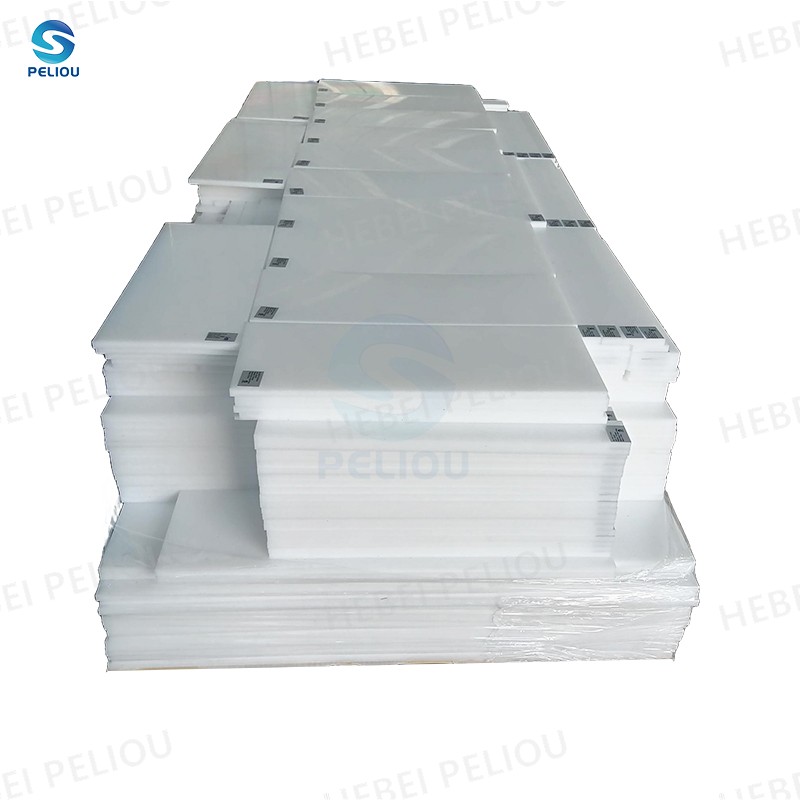
UHMWPE Truck Bed Liners: A Practical Solution for Bulk Material Transport
Dump trucks, mining vehicles, and bulk material trailers are designed to transport large quantities of materials under demanding operating conditions. During loading, transportation, and unloading, the truck body may experience abrasion, material adhesion, and repeated contact with bulk cargo.
Selecting an appropriate truck bed liner can help address these challenges. A liner provides a protective surface between the transported material and the original truck body.
UHMWPE truck bed liners are engineering plastic lining components used in selected bulk material transport applications. Their low-friction characteristics and wear resistance make them a material option for truck beds, hoppers, chutes, and other material handling equipment.
Peliou offers PE-UHMW liner products for truck bed and hopper applications, with customized dimensions and color options according to its official product information.
Table of Contents
- What Are UHMWPE Truck Bed Liners?
- Common Challenges in Bulk Material Transport
- Why Choose UHMWPE for Truck Bed Lining?
- Key Benefits of UHMWPE Truck Liners
- Main Applications
- UHMWPE Liners vs. Other Lining Materials
- How to Select the Right Truck Bed Liner
- Customized Truck Bed Liners from Peliou
- Installation and Maintenance Considerations
- Frequently Asked Questions
- Request a Quote from Peliou
1. What Are UHMWPE Truck Bed Liners?
UHMWPE truck bed liners are plastic lining sheets or panels installed inside selected truck bodies and bulk material transport equipment.
UHMWPE stands for Ultra High Molecular Weight Polyethylene. It is an engineering thermoplastic commonly used in applications requiring wear resistance, low friction, and impact resistance.
In bulk material transport, the liner creates a protective surface between the truck body and the cargo. Depending on the design, it may be installed on the floor, side walls, or other designated areas of the truck body.
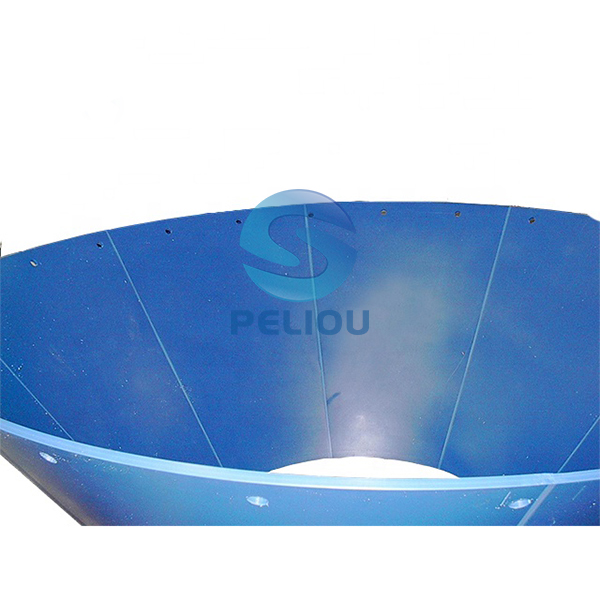
The final liner configuration depends on the truck body dimensions, material being transported, mounting method, and operating environment.
2. Common Challenges in Bulk Material Transport
Bulk material transport involves repeated loading and unloading operations. The characteristics of the cargo and the truck body design influence the wear and maintenance requirements of the equipment.
2.1 Abrasive Material Contact
Materials such as aggregates, minerals, and other bulk products may create abrasive contact with the truck body during loading and transportation.
A suitable liner material can help protect the underlying surface from direct contact with the transported cargo.
2.2 Material Adhesion
Some bulk materials may adhere to the truck bed, particularly when moisture or material characteristics affect unloading behavior.
A low-friction liner surface may be considered where material flow and unloading are important design concerns.
2.3 Wear on the Truck Body
Repeated loading and unloading can contribute to localized wear on the original truck body surface.
A replaceable lining system can provide a separate wear surface, subject to the design and installation requirements.
2.4 Maintenance and Replacement
Truck bed liners are often selected as part of a maintenance strategy for equipment operating in demanding material transport environments.
The liner's dimensions, mounting arrangement, and accessibility should be considered when planning installation and future inspection.
3. Why Choose UHMWPE for Truck Bed Lining?
UHMWPE offers a combination of material characteristics that make it relevant to selected bulk material handling applications.
3.1 Low-Friction Characteristics
UHMWPE has naturally low friction characteristics compared with many conventional engineering materials.
For truck bed lining, this property may be useful where the contact surface needs to support material movement during unloading.
3.2 Wear Resistance
UHMWPE is widely used in industrial applications involving sliding abrasion and repeated surface contact.
This characteristic makes it a material option for truck bed liners exposed to abrasive bulk cargo.
3.3 Impact Resistance
UHMWPE offers good impact resistance, which is relevant for lining components exposed to repeated mechanical contact.
The required thickness and installation method should be evaluated according to the actual loading conditions.
3.4 Moisture Resistance
UHMWPE has low water absorption and can be considered for applications exposed to moisture.
For transport environments involving water, chemicals, or extreme temperatures, buyers should confirm material compatibility with Peliou.
3.5 Lightweight Material Option
UHMWPE is a polymer material and is generally lighter than many metal lining alternatives.
The actual weight of a completed liner system depends on the selected thickness, dimensions, mounting hardware, and overall design.
4. Key Benefits of UHMWPE Truck Bed Liners
4.1 Protective Lining Surface
UHMWPE liner panels create a separate contact surface inside the truck body.
This can help reduce direct contact between the cargo and the underlying structure in areas covered by the liner.
4.2 Support for Material Flow
The low-friction characteristics of UHMWPE make it a material option for applications where bulk material movement is important.
The liner should be selected according to the transported material and the truck's unloading configuration.
4.3 Customized Panel Dimensions
Truck bodies vary in length, width, side wall height, and internal geometry.
Customized liner dimensions can help match the material to the intended installation area.
4.4 Color Options
Peliou lists white,black, blue,red, and customized colors for its PE-UHMW liner products.
Color can be specified according to procurement or project requirements.
5. Main Applications of UHMWPE Truck Bed Liners
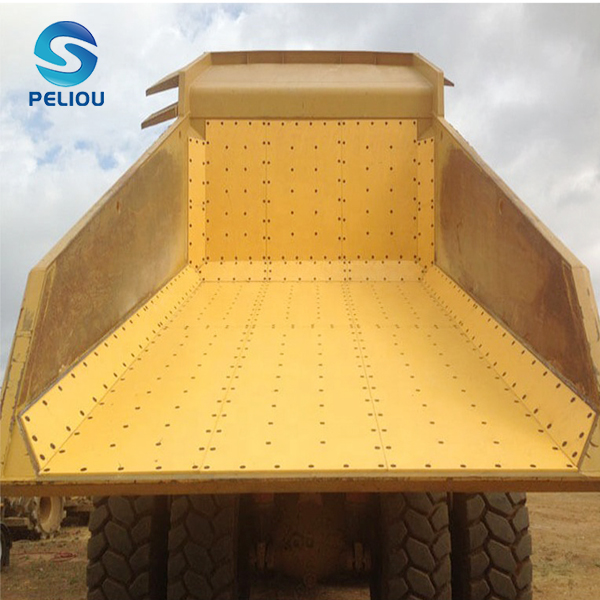
5.1 Dump Truck Bed Lining
Dump trucks transport bulk materials in construction, mining, and industrial operations.
UHMWPE liners can be considered for selected truck bed surfaces where wear resistance and low-friction characteristics are required.
5.2 Mining Truck Applications
Mining equipment may transport abrasive materials such as minerals, ore, and aggregates.
A suitable liner can provide a protective contact surface for the truck body, depending on the material and operating conditions.
5.3 Bulk Material Trailers
Bulk material trailers are used to transport materials between processing facilities, storage areas, and distribution locations.
UHMWPE lining panels may be evaluated for trailer surfaces where material contact and unloading behavior are important considerations.
5.4 Hopper and Chute Lining
Peliou's official liner product information also identifies hopper and chute lining applications.
These components may require wear-resistant lining materials to support bulk material handling operations.
5.5 Bunker and Silo Lining
UHMWPE liners can be considered for selected bunker and silo surfaces where the application requires a plastic lining material.
The final configuration should be based on the equipment geometry and material flow requirements.
6. UHMWPE Liners vs. Other Lining Materials
Different lining materials offer different characteristics. The correct choice depends on the cargo, truck body design, maintenance strategy, and project specifications.
| Comparison Factor | UHMWPE Liner | Metal Liner | Rubber Liner |
|---|---|---|---|
| Material Type | Engineering plastic | Metal | Elastomer |
| Friction Characteristics | Low friction characteristics | Depends on surface finish | Depends on compound and surface |
| Wear Behavior | Good abrasion resistance | Depends on metal grade | Depends on rubber compound |
| Weight | Generally lightweight | Generally heavier | Depends on thickness and compound |
| Customization | Cutting and machining options | Fabrication options | Molding and fabrication options |
This comparison is intended as a general material overview. Actual performance depends on the specific material grade, liner design, cargo characteristics, and operating conditions.
7. How to Select the Right UHMWPE Truck Bed Liner
Selecting a truck bed liner requires more than choosing a material name. Buyers should review the truck body dimensions, cargo characteristics, and installation requirements.
7.1 Confirm the Truck Body Dimensions
Measure the required liner areas, including the floor and side walls where applicable.
Provide drawings or dimensional information to ensure that the liner panels match the intended installation.
7.2 Identify the Transported Material
The material being transported influences wear, impact, adhesion, and unloading behavior.
Provide information about the cargo type, particle size, moisture conditions, and operating environment.
7.3 Determine the Required Thickness
Liner thickness should be selected according to the truck body design, loading conditions, and required service considerations.
Peliou should confirm the suitable thickness for the intended application.
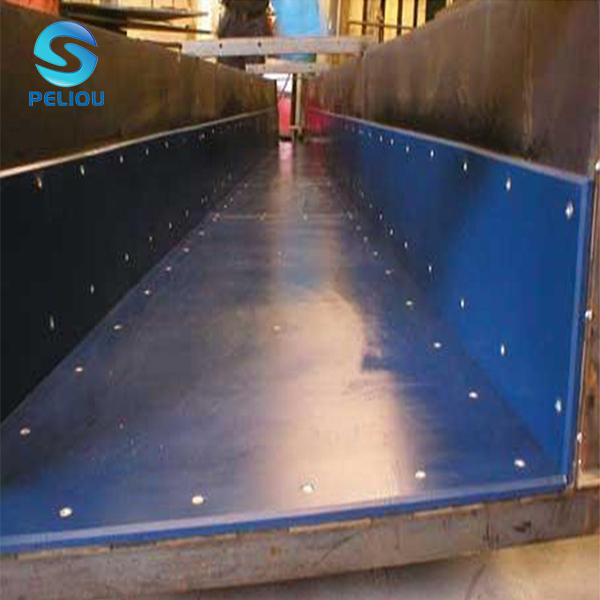
7.4 Review Mounting Details
The liner may require fastening holes, countersinking, or other machining features.
Confirm the attachment method and whether the liner must be removable for maintenance.
7.5 Check Temperature and Chemical Conditions
Transport equipment may operate in different climates and may carry materials with specific chemical characteristics.
Confirm material compatibility with Peliou before ordering for specialized applications.
8. Customized Truck Bed Liners from Peliou
Peliou offers PE-UHMW liner products for truck bed and hopper applications.
According to the official product page, customization options include size and color.
When requesting a quotation, buyers can provide:
- Truck body length and width.
- Required liner thickness.
- Floor and side wall dimensions.
- Mounting hole positions.
- Required panel shape and machining details.
- Transported material and operating environment.
- Color preference and order quantity.
- Technical drawings or sample components.
Providing complete project information helps Peliou review the required liner configuration and confirm the manufacturing details.
9. Installation and Maintenance Considerations
Correct installation is important for the performance and serviceability of truck bed liners.
9.1 Prepare the Truck Body
Inspect the original truck body surface and confirm that it is suitable for the planned liner installation.
9.2 Verify Panel Dimensions
Check the liner dimensions against the approved drawings before installation.
9.3 Confirm Fastening Details
Ensure that the mounting arrangement is compatible with the truck body and does not interfere with normal operation.
9.4 Inspect the Liner Surface
Regularly check for visible wear, damage, loose fasteners, or other conditions that may require maintenance.
9.5 Follow Equipment Maintenance Procedures
Inspection intervals and replacement requirements should follow the truck manufacturer's recommendations and the facility's maintenance plan.
10. Frequently Asked Questions
Q1: What are UHMWPE truck bed liners used for?
UHMWPE truck bed liners are used as protective plastic lining components in selected bulk material transport applications. Peliou lists truck bed, dump truck, hopper, chute, bunker, and silo lining among its applications.
Q2: Why use UHMWPE for dump truck liners?
UHMWPE offers low friction characteristics, wear resistance, impact resistance, and low water absorption. These properties make it a material option for selected bulk material transport applications.
Q3: Can Peliou customize truck bed liner dimensions?
Yes. Peliou lists customized sizes for its PE-UHMW liner products. Buyers should provide the required dimensions and technical drawings for confirmation.
Q4: What colors are available?
Peliou's official product page lists white,black, blue, red,yellow,green and customized color options.
Q5: Can UHMWPE liners be used in hoppers and chutes?
Yes. Hopper and chute lining are listed applications on Peliou's official UHMWPE lining product page.
Q6: What information is needed for a quotation?
Provide the required dimensions, thickness, mounting details, cargo type, application, order quantity, and technical drawings.
Q7: Are UHMWPE liners suitable for every transported material?
No single liner material is suitable for every application. Material compatibility and performance depend on cargo characteristics, operating conditions, and the liner design. Confirm the requirements with Peliou before ordering.
11. Request a Quote for UHMWPE Truck Bed Liners
Choosing the right truck bed liner can help address wear and material contact issues in bulk material transport equipment.
If you are sourcing UHMWPE truck bed liners for dump trucks, mining vehicles, bulk material trailers, hoppers, or industrial transport equipment, Peliou can discuss customized product requirements based on your application and drawings.
Looking for Customized UHMWPE Truck Bed Liners?
Contact Peliou to discuss your truck body dimensions, required liner thickness, mounting details, cargo type, and customized production needs.
Company: Hebei Peliou New Materials Technology Co., Ltd.
Email: info@plasticsuperior.com
WhatsApp: +86 186 3019 5563
Official Website: www.peliou.com
Send your truck body drawings or liner requirements to Peliou today and explore customized UHMWPE truck bed liner solutions.